

Creatine is the most widely used supplement in sports nutrition, and it’s earned that spot. Research shows it gives your muscles more fuel for short, hard efforts, which means you can push more quality work in a session. Over weeks, that translates into results: more strength, more lean mass, and faster recovery.
But here’s the question: Do you still need it in the off-season?
The short answer is yes: if you’re still training, keep taking it.
But there are a few times you might want to stop taking it. Let’s break it down.
What Happens When Athletes Stop Taking Creatine?
Nothing dramatic. Creatine supplements work by saturating the creatine and phosphocreatine stored in your muscles. Phosphocreatine rebuilds ATP, which is what your muscles use to fuel the first few seconds of a hard effort.
Your body needs about 5 grams of creatine per day to keep muscle stores saturated. It’s nearly impossible to get this much creatine from food, which is why supplementing is effective.
When you stop taking creatine, your muscle stores will slowly start returning to their baseline levels. It doesn’t happen overnight. It generally takes around 4–6 weeks for levels to return, though this varies per person.
One myth worth mentioning: supplementing doesn’t shut down your body’s own creatine production. Your liver and kidneys pick back up where they left off. This is why there’s no need to cycle creatine.
When to Keep Taking Creatine during the Off-Season
You’re Still Focused on Building Strength
For many athletes, the off-season is when the real strength and size work happens. That’s exactly where creatine’s evidence is strongest. Paired with resistance training, it consistently produces bigger gains in strength and lean mass than training alone.
Stopping now would mean giving up an edge right when you’re best placed to use it.
Yes: You’re Over 40
Muscle mass and strength start slipping with age, and an easier off-season can speed that up. Studies in older adults show creatine plus resistance training builds more muscle and strength than training alone. If you’re a masters athlete, taking creatine in the off-season helps protect what you have.
Yes: You Care about the Other Benefits
Creatine isn’t only a muscle supplement. Your brain uses it too, and research suggests it can support memory and mental performance, especially when you’re short on sleep. Those benefits don’t stop mattering when the season does.
Yes: You’re Injured
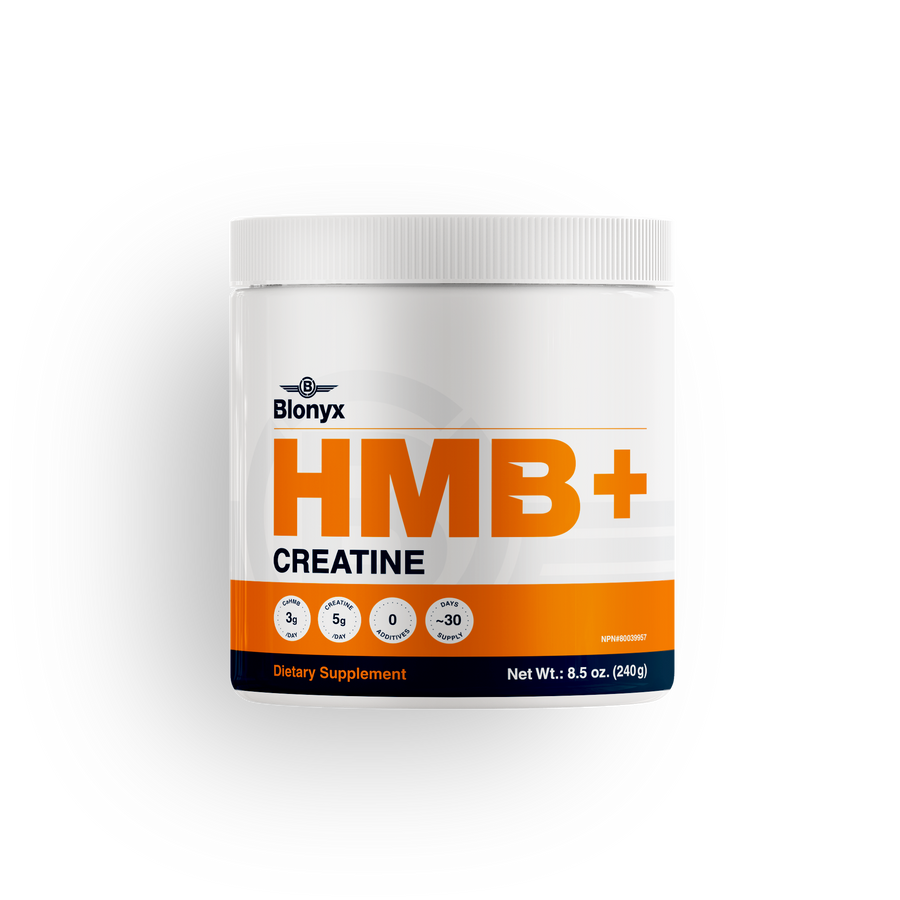
It’s also worth staying on if you’re recovering from an injury. There’s some evidence, though mixed, that creatine helps limit muscle loss during periods of inactivity and speeds recovery of strength afterward. However, we’d recommend HMB over creatine in this case, as it has stronger research for preserving muscle during inactivity. Or, use HMB+ Creatine to cover both.

Yes: Your Off-Season Is Short
It takes weeks to fully load your muscles and 4–6 weeks for those stores to wash out. If you’ll be back in training within a month or two, stopping just means rebuilding stores when preseason starts.
Maybe: You Need to Manage Body Weight
Creatine usually adds 1–2 kg, mostly water stored inside the muscle. That’s not fat, and for many athletes it doesn’t matter.
But if you compete in a weight-class sport or extra body weight limits performance (think cyclists carrying extra body weight up hill climbs), it might. In the off-season you usually have room to carry it. Just plan around it: if you’d stop before a weigh-in, give yourself 4–6 weeks for that water to come off.
Stop: If You’re Genuinely Taking a Break from Training
If you’re taking several weeks fully off, with little or no training, stopping is fine. Creatine’s benefits are tied to the work you do, so without the work there’s not much to lose.
What about endurance athletes?
Here is where the answer isn’t so clear. Creatine shines in strength work, sprints, and repeated hard efforts, but the evidence for steady aerobic performance is much weaker. Weight matters too. If you’re a runner or a cyclist who lives on the climbs, every kilo costs you energy, and the 1–2 kg of water creatine adds can work against you.
So the question isn’t whether your sport is endurance-based. It’s two things: does your off-season training include the kind of work creatine helps, and would carrying an extra kilo or two actually slow you down?
| Your off-season training | Our call |
|---|---|
| Cyclist doing gym work and sprint intervals | Continue |
| HYROX athlete building strength and high-intensity capacity | Continue |
| Marathoner adding strength training | Worth continuing |
| Swimmer working on explosive starts and turns | Worth continuing |
| Endurance athlete doing only easy aerobic work | Optional |
| Athlete for whom cutting body weight matters | Consider stopping |
| Any athlete taking a complete break | Fine to stop |
These calls are based on each training style and the research on creatine. No trial has tested every sport’s off-season, but the logic holds: match the supplement to the work.
How much to take
The same as if you were in training: 5 g of creatine monohydrate a day, every day, rest days included. Consistency matters, not timing, so take it whenever you’ll remember.
A few things worth knowing:
- Getting bloodwork done? Tell your doctor you take creatine. It raises creatinine on standard tests, which can make your kidney numbers look off when they’re fine.
- Existing kidney issues? Check with your doctor before you start or continue.
The bottom line
If you’re still training hard, especially lifting or doing high-intensity work, keep taking creatine. The off-season is where a lot of your gains get built, and creatine helps you build them.
If you’re shutting it down completely for a few weeks, stop without worry, then reload 3–4 weeks before you start back.
Resources
- Kreider RB, et al. (2017). International Society of Sports Nutrition position stand: safety and efficacy of creatine supplementation in exercise, sport, and medicine. Journal of the International Society of Sports Nutrition, 14:18.
- Antonio J, et al. (2021). Common questions and misconceptions about creatine supplementation: what does the scientific evidence really show? Journal of the International Society of Sports Nutrition, 18:13.
- Hultman E, et al. (1996). Muscle creatine loading in men. Journal of Applied Physiology, 81(1):232–237.
- Chilibeck PD, et al. (2017). Effect of creatine supplementation during resistance training on lean tissue mass and muscular strength in older adults: a meta-analysis. Open Access Journal of Sports Medicine, 8:213–226.
- Xu C, et al. (2024). The effects of creatine supplementation on cognitive function in adults: a systematic review and meta-analysis. Frontiers in Nutrition.
- McMorris T, et al. (2006). Effect of creatine supplementation and sleep deprivation, with mild exercise, on cognitive and psychomotor performance, mood state, and plasma concentrations of catecholamines and cortisol. Psychopharmacology, 185(1):93–103.
- Hespel P, et al. (2001). Oral creatine supplementation facilitates the rehabilitation of disuse atrophy and alters the expression of muscle myogenic factors in humans. Journal of Physiology, 536(2):625–633.
- Deutz NE, et al. (2013). Effect of β-hydroxy-β-methylbutyrate (HMB) on lean body mass during 10 days of bed rest in older adults. Clinical Nutrition, 32(5):704–712.