

Most athletes who pay attention to protein focus on one question:
Am I getting enough each day?
That is the right place to start. But there is a useful second question that gets much less attention:
Where is that protein showing up in your day?
It's common to eat relatively little protein at breakfast, a moderate amount at lunch, and then try to catch up with a large serving at dinner. You may still hit your daily target, but you are giving your body fewer protein-rich meals across the day.
This does not mean every meal needs to be perfectly measured—or that eating a large dinner is somehow bad. It means that once your total intake is in a good place, improving its distribution may be one of the simplest ways to make that intake work harder for your training.
In this article, we’ll cover:
- Why total daily protein remains the priority
- What the research says about distributing protein
- How to run a 60-second audit of your own diet
- How to close a protein gap without rebuilding your entire routine

Start With Your Total Daily Protein
Protein provides the amino acids your body uses to repair and remodel muscle tissue after training. For active adults, the International Society of Sports Nutrition recommends approximately 1.4–2.0 grams of protein per kilogram of body weight per day as a broadly useful range.
That would put a 75 kg athlete at roughly 105–150 grams per day, depending on their training, goals, energy intake and individual needs.
This is a general range, not a prescription. Endurance volume, resistance training, calorie restriction, age and overall diet can all influence how much protein is appropriate.
The important point is that distribution cannot make up for consistently under-eating protein. Before worrying about timing, make sure there is enough protein in the day to distribute.
The ISSN position stand on protein and exercise also emphasizes that athletes should prioritize whole-food protein sources, with supplements serving as a practical way to meet their needs when food is inconvenient.
Then Look at Where Your Protein Lands
Imagine two athletes who each eat 120 grams of protein per day.
The first gets:
- 10 grams at breakfast
- 20 grams at lunch
- 20 grams during the afternoon
- 70 grams at dinner
The second gets:
- 30 grams at breakfast
- 30 grams at lunch
- 30 grams after training
- 30 grams at dinner
Their total intake is identical. The difference is how many times during the day they eat a meaningful serving of protein.
A small controlled study found that distributing protein more evenly across breakfast, lunch and dinner produced a greater 24-hour muscle protein synthesis response than concentrating most of it at dinner. Another 12-week study found that increasing protein at breakfast showed a potentially favourable effect on lean-mass gains, although the result did not reach conventional statistical significance.
The broader evidence is not completely settled. A systematic review of protein distribution found an association with greater muscle mass, but insufficient evidence to draw firm conclusions about strength or protein turnover. Other researchers have also noted that total protein and protein distribution are difficult to separate in real life.
So the practical takeaway is not that protein must be divided perfectly.
It's this: Once your daily intake is adequate, spreading meaningful servings across the day is a sensible strategy—and it may expose meals you have been unintentionally neglecting.
Run the 60-Second Protein Audit
Think through everything you ate yesterday.
Write down your main meals and snacks, then estimate how much protein each contained. Nutrition labels or a food-tracking app can help, but you do not need perfect numbers.
Your audit might look something like this:
| Meal | What you ate | Approximate protein |
|---|---|---|
| Breakfast | Toast, fruit and coffee | 6g |
| Lunch | Chicken wrap | 30g |
| Snack | Granola bar | 4g |
| Dinner | Salmon, rice and vegetables | 45g |
| Evening snack | Yogurt | 15g |
Now ask three questions:
- Is one meal responsible for most of my daily protein?
- Does my breakfast contain a meaningful protein source?
- Do I regularly finish training and then go several hours without eating protein?
You are not looking for a flawless score. You are looking for the most obvious gap.
For many athletes, that gap is breakfast. For others, it is the period between a lunchtime workout and dinner. Travel days, early sessions and busy afternoons are also common trouble spots.
How Much Protein Should Be in a Meal?
Research does not support one perfect serving for every athlete.
A useful general range is approximately 20–40 grams of high-quality protein per meal, depending on body size, age, training and the rest of the diet. Bodyweight-based recommendations often fall around 0.25–0.4 grams per kilogram per meal.
For a 75kg athlete, that works out to approximately 19–30 grams.
That is not a maximum absorption limit. Your body does not throw away every gram above a certain number. A large protein-rich meal can still contribute to daily needs and support other functions in the body.
The goal is simply to create several useful opportunities for protein intake rather than relying on one meal to do almost everything.
A review examining protein intake per meal proposed approximately 0.4 grams per kilogram across at least four meals as one way to reach a daily intake near 1.6 grams per kilogram. It is a practical framework, not a rule every athlete needs to follow.
Close the Gap With Food First
Once you identify your weakest meal, start with the easiest food-based improvement.
For breakfast, that could mean:
- Eggs with toast
- Greek yogurt with fruit and oats
- A tofu scramble
- Cottage cheese and fruit
- Leftovers from dinner
- Oatmeal paired with a meaningful protein source
For lunch, it might mean adding eggs, chicken, fish, tofu, lentils or another familiar protein source to a meal that is currently built mostly around carbohydrates.
Your diet does not have to look like a fitness meal plan. It just needs a protein source substantial enough to count.
When Convenience Is the Real Problem
Sometimes the issue isn't knowledge. It's logistics.
You may understand exactly what your post-training meal should contain but still have to commute, start work, take the kids somewhere or get to your next session.
That is where a protein supplement can be useful.
It should not replace every whole-food meal. Its job is to make a good routine easier to follow when preparing or carrying food is impractical.

A Practical Dairy-Free Way to Fill the Gap
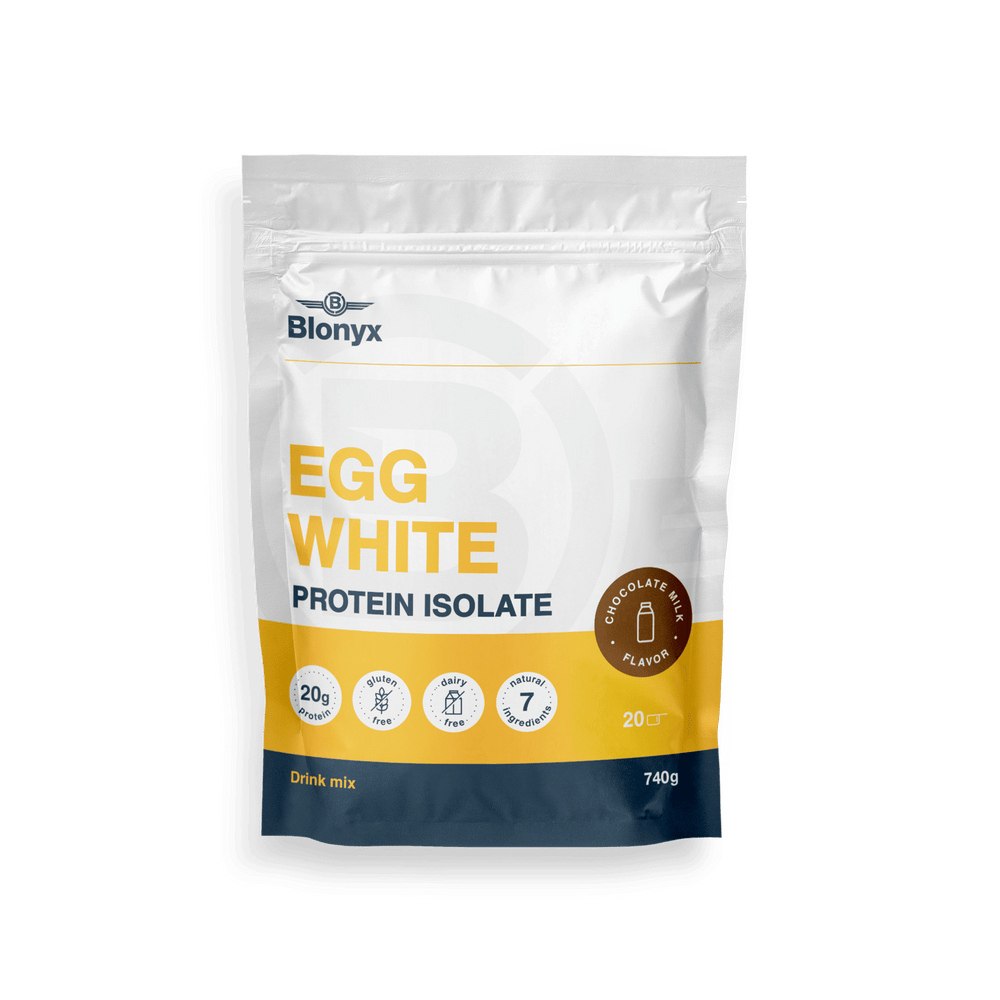
Blonyx Egg White Protein Isolate provides 20 grams of complete protein per serving, isolated from egg whites.
It was created for athletes who want a short ingredient list and a dairy- and gluten-free alternative to whey or plant-based protein powders. It contains seven ingredients and can be mixed with cold water or your preferred milk after training, added to a smoothie, or used to strengthen a breakfast that would otherwise be low in protein.
Explore Egg White Protein Isolate
Egg White Protein Isolate contains egg and should not be used by anyone with an egg allergy. Do not mix it with hot liquids.
Try This for One Week
You do not need to overhaul your diet today.
Instead, run a simple seven-day experiment:
- Audit three typical days of eating.
- Find the meal or training window with the least protein.
- Add one practical protein source to that part of the day.
- Repeat it for one week.
- Judge it on consistency, convenience and how well it fits your routine.
If your breakfast already contains plenty of protein, leave it alone and look elsewhere. If dinner is doing most of the work, move some protein earlier in the day rather than simply adding more food.
And if your daily total is still too low, focus on that before worrying about an ideal distribution.
The Bottom Line
Protein intake does not need to be perfectly timed to be effective.
Your total daily intake, training quality and overall energy intake still matter most. The research on protein distribution is promising but not definitive, and no meal schedule will compensate for a consistently inadequate diet.
But a simple protein audit can reveal something useful: the part of your day where good intentions repeatedly meet inconvenient reality.
Fix that one gap first.
That’s all for now. Train hard!
Research Referenced
- International Society of Sports Nutrition position stand: protein and exercise
- Systematic review of protein intake distribution and muscle outcomes
- Even versus skewed protein distribution and 24-hour muscle protein synthesis
- High-protein versus low-protein breakfast during resistance training
- Review of optimal protein intake per meal