




Each week in my Research Update, I distill the latest sports science research into practical insights to help you improve your training, performance, and recovery.
In this week’s update:
- Whether time-restricted eating can reduce body fat without costing you performance
- Why an inconsistent bedtime may hit recovery hardest after your toughest training days
- What actually makes an electrolyte drink absorb better than plain water or a basic sports drink
Time-Restricted Eating Can Trim Body Fat a Little, Without Hurting Performance

This systematic review and meta-analysis pooled 16 studies involving 245 athletes across resistance training, running, taekwondo, and dance to examine what time-restricted eating actually does to body composition and athletic performance.
Across the pooled data, restricting food intake to a set daily window produced a small but statistically significant reduction in body mass and body-fat percentage compared with normal eating patterns. Importantly, athletes didn’t appear to pay for it in the gym or on the course: aerobic capacity, muscular endurance, strength, and power were essentially unchanged.
Elite athletes showed a tendency toward slightly larger reductions in body fat than sub-elite athletes, although that difference wasn’t statistically confirmed.
Why it matters:
Time-restricted eating and intermittent-fasting-style eating windows are popular among athletes trying to manage body composition without constantly tracking every calorie. This suggests it can be a viable tool if it fits your lifestyle — just not a magic performance or fat-loss strategy.
My thoughts:
I like this because the result is useful without being dramatic. If eating within a set window makes your nutrition easier to stick to, this suggests you can probably do it without sacrificing strength, endurance, or power.
I just wouldn’t expect the eating window itself to transform your body composition. It looks more like a modest tool for consistency than a shortcut.
Going to Bed at a Different Time Every Night May Be Costing You Recovery

This 28-day study followed 54 university athletes and paired their daily training load with sleep timing and next-morning heart rate variability (HRV), generating more than 1,200 observations.
Harder-than-usual training days were followed by lower HRV the next morning, which isn’t surprising. What was more interesting was that inconsistent sleep timing independently lowered HRV — and made the recovery hit from hard training noticeably worse.
That interaction didn’t appear in resting heart rate, subjective wellness, or jump performance, so this isn’t evidence that one late bedtime suddenly ruins performance. But it does suggest that when you sleep may matter alongside how much you sleep, particularly when training load is high.
Why it matters:
A lot of athletes obsess over total sleep hours while letting bedtime swing by several hours depending on the day. If you’re already tracking HRV or trying to maximize recovery through a heavy training block, schedule consistency may be another lever worth paying attention to.
My thoughts:
The interaction is the part I care about most. It wasn’t simply “irregular sleep is bad” — irregular timing seemed to make the recovery response worse after the harder training days, when you need recovery most.
You don’t need to turn bedtime into another metric to obsess over, but during a hard block I’d put more effort into keeping your sleep window reasonably consistent instead of relying on weekend catch-up sleep.
What Actually Makes an Electrolyte Drink Work?

This narrative review pulled together 86 studies spanning two decades of oral rehydration research to examine which formulation choices actually help fluid move into the body efficiently.
One of the clearest themes was tonicity. Hypotonic drinks — meaning they contain a lower concentration of dissolved particles than blood plasma — generally supported faster water absorption than isotonic or hypertonic formulas.
The review also highlighted the benefit of combining different carbohydrate sources, such as glucose and fructose, because they use separate intestinal transport pathways rather than competing for the same one. Smaller studies also suggest that adding protein or using milk-based drinks may improve post-exercise fluid retention, although that evidence is much less established.
Why it matters:
“Electrolytes” alone don’t tell you whether a hydration product is well designed. Sodium concentration, carbohydrate type, total concentration, and how those ingredients interact all affect how efficiently fluid can actually be absorbed.
My thoughts:
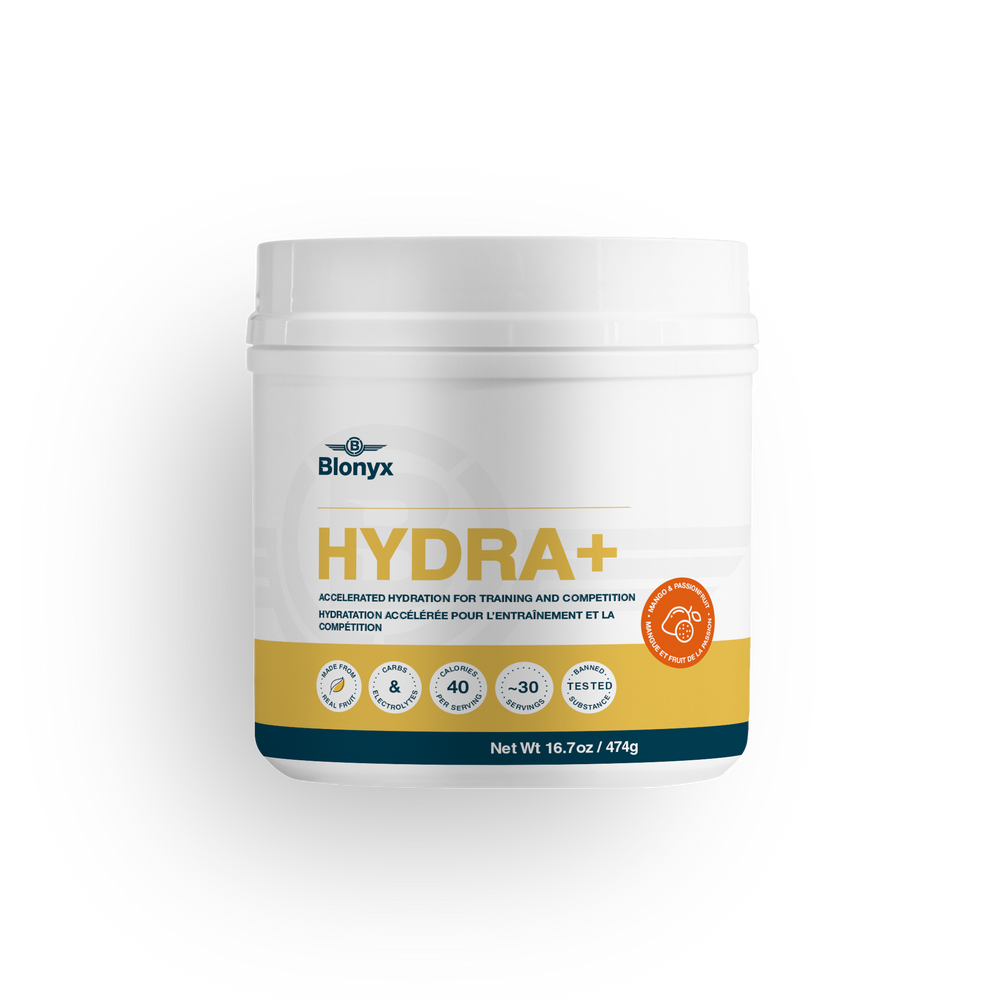
The hypotonic point is the one worth remembering. An effective hydration product like our Hydra+ isn’t simply water with a huge dose of sodium or sugar dumped into it — the overall formulation matters.
The multiple-carb-source finding is useful too, because it reinforces that absorption can be improved by using different transport pathways rather than relying on one type of carbohydrate alone.
The protein and milk findings are interesting, but they come from much smaller studies, so I’d treat those as something to watch rather than a reason to redesign your entire hydration strategy.
— That’s all for now, train hard!
If you learned something new and are curious to know more, check out more articles and my growing list of weekly Blonyx Research Updates.