


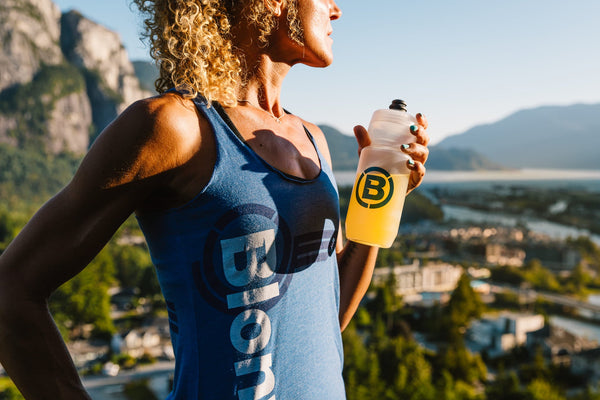

Michaela Khan spends her days watching people run on a special treadmill, analyzing every step, using force plates and motion capture cameras. She's a PhD candidate studying running biomechanics at UBC, and yes, her friends always want to volunteer as test subjects.
"I think they get a bit disappointed when I tell them that although I spend my days watching people run, I don't always change their biomechanics," she admits.
That may not be what most people expect to hear from a biomechanist. But through her research, Michaela has learned that people are generally adapted to their own movement patterns.
The Girl Who Ran Weird
In grade school, while running as part of a relay team, a friend watching from the sidelines told her she ran weird.
"No one had ever told me that before, so I got a bit curiously obsessive about what running technique was 'weird' versus 'not weird,'" she recalls. Wanting to understand the mechanics behind it all, she became a self-described "big running geek," watching races, reading about shoe tech, and diving into the movement patterns that fascinated her. No matter what sport she played, running was always alongside it.
She went on to do her undergrad and masters in Kinesiology, and when the opportunity came up to study running biomechanics at UBC for her PhD, it felt like the perfect fit.

What the Research Actually Says
"Despite what people may have told you," Michaela says, "running is good for your knees."
The idea that running ruins your joints is one of the biggest misconceptions she encounters. Yet in her research, recreational runners have lower rates of osteoarthritis compared to non-runners. For those who already have knee osteoarthritis, Michaela has been studying whether continuing to run accelerates the changes in the knee joint.
"So far we haven't found that it changes your knee joints in worse ways - at least in the short-term," she explains.
Her research has also shifted how she thinks about biomechanics itself. She used to believe that technique needed to be corrected, that there was a right way to run. Now, unless someone is injured or wants to run faster, she's not usually changing much. "When you change technique, force doesn't disappear - it just moves somewhere else," she explains. "You have the potential to move it to a part of the body that isn't ready to tolerate that force. You can get injured from that."
Her advice is to stick to what you're doing, strengthen your body to tolerate it, and focus on training load and capacity rather than chasing perfect form. Usain Bolt and Shelly-Ann Fraser-Pryce won the same race with vastly different techniques. That's true across all race distances, even the sub-2-hour marathon runners. There is no standardized approach.
After putting herself through multiple biomechanical tests she’s confident in saying, "I do not run weird."

A Well Rounded Athlete/Master of None
Michaela is a triathlete, but that barely scratches the surface. She cross country skis, though she's still getting the hang of it, hikes, and enjoys a good ballet class. She played varsity squash for six years through her undergrad and master's, and while she loved the team aspect and performing at a high level, she struggled mentally and physically with concentrating on just one sport.
Variety drew her to triathlon and as she says, “why do one sport well when you can do three mediocrely?”. Road biking was the last piece of the puzzle, added in the first week of the pandemic when she bought a bike off Facebook Marketplace.
Rather than following a rigid plan, she wakes up and checks in with how her body feels, then decides what that day calls for. "I've learned over the years to really listen to my body. I just want to be able to do this for as long as I possibly can."
Fueling the Lab and the Long Run
While taking an exercise nutrition class in undergrad, Michaela realized how bad her eating habits actually were - about 90% carbs, not enough protein or vegetables. Things have improved since then, though she's quick to admit she's a really bad cook. "My partner is now the chef in the house and that has probably changed my life," she says. "It helps that he's Kenyan, so now I'm eating like Kipchoge!" She's joking, mostly, but there is a lot more ugali in her life than before they started dating.
She's also gotten more intentional about fueling her training. Pre-workout, she keeps it simple, usually a bagel with peanut butter and honey. Post-training, she reaches for Blonyx Egg White Protein Isolate. "It tastes just like chocolate milk, so I like that." And mid-run, after learning the hard way that she needed something out there, she uses Beet It Sport Top Up 100 energy gels. "They're not as sweet and sickly as other gels on the market. I don't like things that are too sweet, and so they really hit the mark for me."
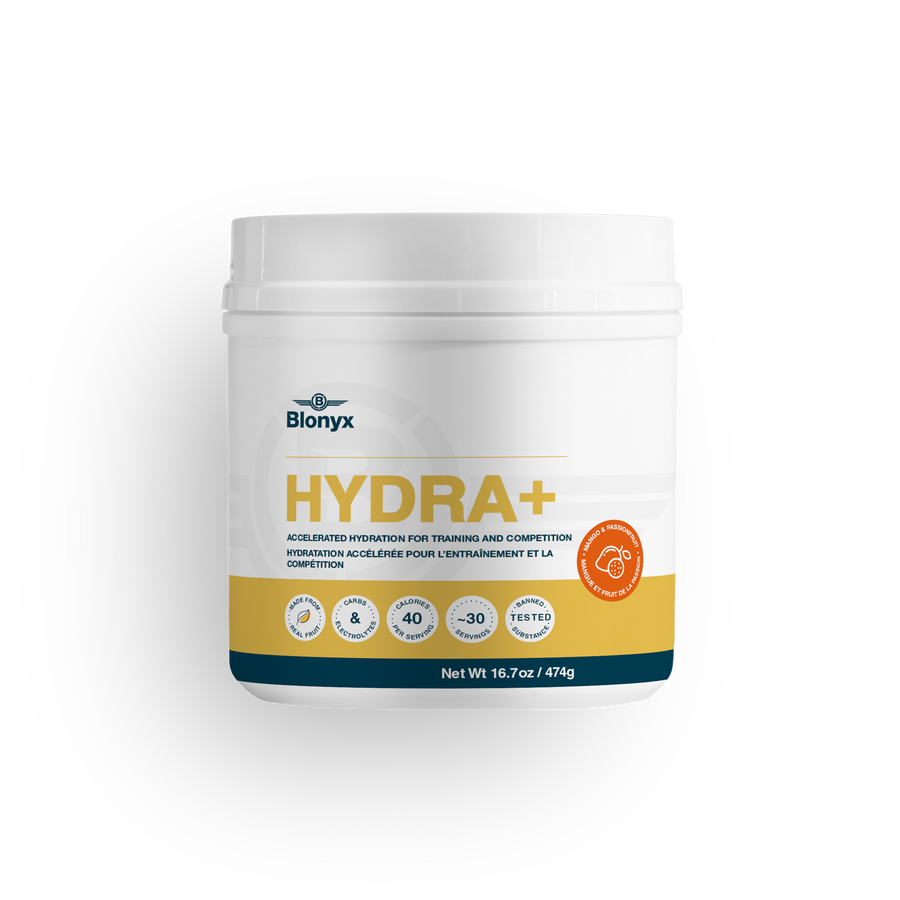
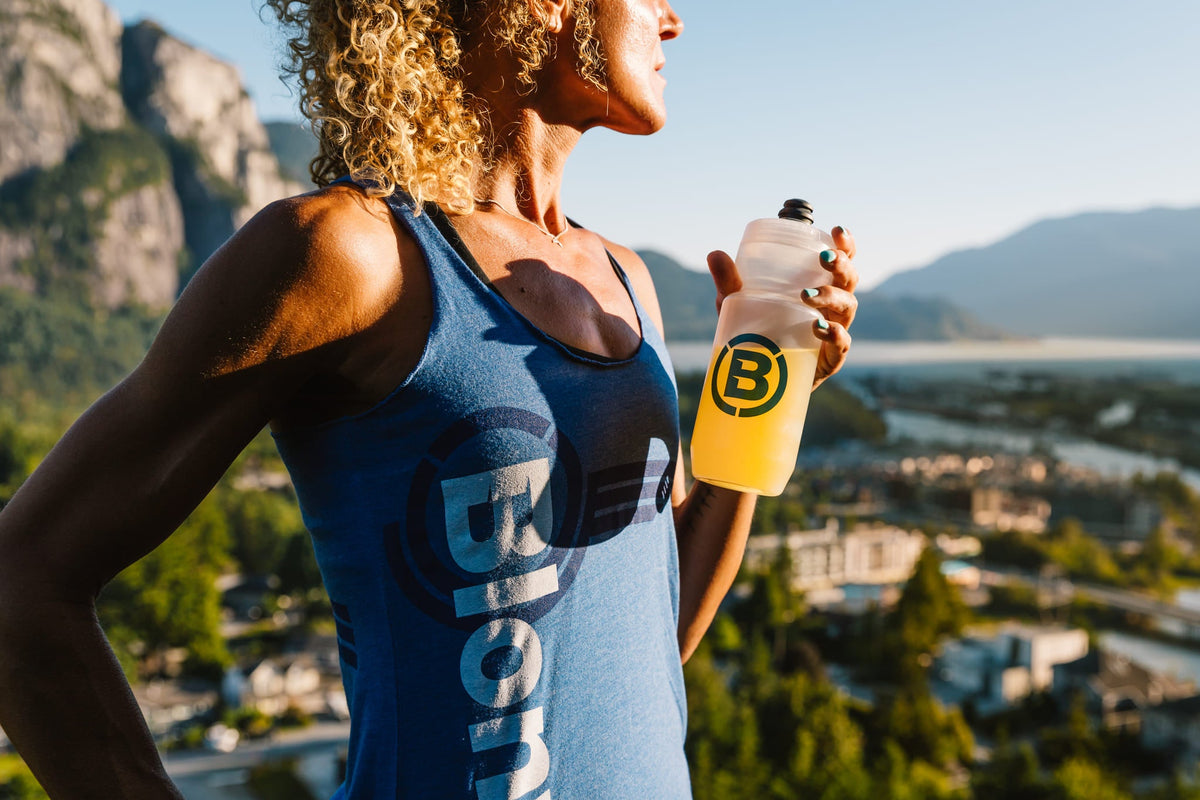
What drew her to Blonyx in the first place was simplicity. "Simple but effective ingredients, few ingredients, no fluff or fake stuff." She was especially wary of the bright blue electrolyte mixes she knew had to be artificial. Blonyx Hydra+ is different: "It’s nice and natural." She believes in the brand because the team is well-versed in the research, and as someone who can critically appraise studies, that matters to her.

Recovery, Data, and Listening to Your Body
Juggling a PhD, training, and everything else that comes with life means recovery has to be taken seriously. For Michaela, that starts with sleep. "I'm not a night owl or an early bird. I just like sleeping." She's been taking more naps, getting more intentional about fueling, and paying closer attention to what her body is telling her.
She uses wearable data but notes that most numbers are best interpreted alongside other factors. "When you look at data from a workout, think about everything that's going on. Was it really hot? Did you sleep well? Did you fuel? Always look at data in the context of the entire situation."
What's Next
This summer, Michaela will graduate and be a non-student for the first time in her life. She's not thrilled about losing her student bus pass, but says she's looking forward to commuting by bike more. She's been a running coach for various programs around Vancouver for years, and now she's launching her own coaching business built around evidence-based principles, as well as offering shoe consultations and foot strengthening programs. When she's not in the lab or training, she's happiest with spending time with family or at a restaurant. "I love trying new food, and it gives my partner a break from cooking for us both!"
For anyone wanting to get into triathlon, her advice is to find your people. "I've learned so much from other athletes that I couldn't possibly have learned on my own." Also, "Smile more. It can actually improve your running economy."
You can follow Michaela on Instagram @michaelas.happiness.
That’s all for this week! If you enjoyed reading Michaela's story, head over to the Blonyx Blog for more stories of athletic ambition.
– Train hard!
Looking for more ways to keep up with Blonyx?
Now, you can join the Blonyx Strava Club to track your progress, share training tips, and connect with athletes who share your athletic ambition.
You can also follow us on Instagram and Facebook for additional sports science information, announcements, exciting giveaways, and more!